Data Center Initiatives to Respond to Climate Change
As society accelerates its digitalization (digital transformation), data centers play an increasingly important role as the foundattion supporting IT infrastracture.Therefore, responding to climate change is an important initiative in operating data centers.
Companies are required to take two types of measures to cope with climate change: “mitigation” measures to suppress the progress of global warming by reducing greenhouse gas emissions, such as CO2, and “adaptation” measures to prepare for natural disasters associated with climate change.
Our data centers support customers to reduce greenhouse gas emissions through highly-efficient, disaster-resistant, robust facilities and energy-saving operations.
Contributions to Reducing the Environmental Impact: Green IT Promotion
The major cause of CO2 emissions in data centers is power consumption from the use of IT equipment and air conditioners to cool servers. In response, we promote the reduction of power consumption using a variety of measures, such as introducing energy-efficient IT equipment and efficient free cooling chiller, adopting open-air cooling (free cooling) during winter, and finely controlling air conditioning.
Each of our data centers quantitatively manages power usage effectiveness through the PUE index published by the Green Grid, an industrial association in the U.S. that promotes energy saving in data centers.
By providing server virtualization, cloud services and high-quality operation from experienced engineers, we have also contributed to reducing the environmental impact at the stages when customers use IT equipment.
In addition, the use, disposal, and recycling of IT equipment are important aspects. When customers select equipment in procuring servers and disposing of equipment, we serve with environmental care.
Refer to this page for details on efficient water use in our data centers.
Contributions to the Development of a Natural Disaster Resilient Society
Recently, the impact of extreme weather on customer companies has become apparent. Our data centers' strong business continuity helps customers enhance their resilience※1. In particular, our large-scale flagship data centers, built respectively in Kanto region and Kansai region, have received Tier 4 certification, the highest level of facility standards offered by the Japan Data Center Council (JDCC). Our robust facilities, which are resistant to natural disasters such as earthquakes, typhoons, tornadoes, heavy rains and floods, and thorough security utilizing the most advanced technology have attracted many customers. We also support customers' business continuity by, for example, preparing some of the rooms in the facility for customers to use as a disaster recovery room in the case of a disaster.
※1 Resilience: recuperative ability and durability to promptly recover function even in disastrous circumstances
Refer to this page for details on data centers.
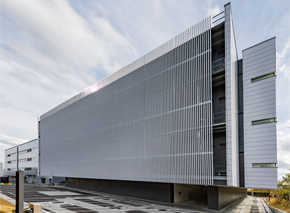
netXDC Sanda Center 2
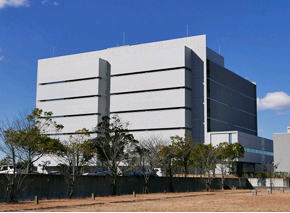
netXDC Chiba Center 2
Initiatives for Conserving Resources and Reducing Waste Output
Basic Thinking with Regard to Conserving Resources and Reducing Waste Output
In addition to being a global environmental preservation issue, the conservation of resources and reducing waste are also initiatives that lead to overall cost reductions as a company. The waste output by SCSK consists mainly of waste paper and other general waste generated by our offices, and waste plastics and metal scraps generated by the activities of our offices and data centers.
Based on an awareness of these facts, SCSK engages in initiatives centering primarily around recycling and waste reduction, while at the same time conducting awareness raising activities for its employees from the perspectives of both environmental preservation and cost reduction.
Paperless Initiatives
SCSK promotes paperless meetings throughout the company. Departments implementing these initiatives have achieved reductions in printed paper volumes of 40 percent or more※2. Our paperless initiatives include not only standard meetings but extend to board of director meetings as well.
- ※2 FY2023 reduction results based on FY2015
Reducing General Waste Output in Our Day-to-Day Business Operations
At SCSK, we are working to reduce the amount of general waste that we produce through the use of sustainable resources in our day-to-day business operations. For example, when storing software, we recommend that our employees and partner companies use electronic (i.e. downloadable) data storage media instead of disc-based media such as CDs; and that when providing software to customers they should use easily recyclable packaging materials such as paper wherever possible. In this way, we are endeavoring to reduce waste in collaboration with our stakeholders.
Actual Waste Output Data
SCSK sets company-wide targets for reducing general waste output, and works to ascertain actual performance data and disclose information on a regular basis.
(For our environmental targets and actual amounts of waste generated, please see the environmental goals page)
SCSK does not produce any harmful waste through its business activities.
Reducing Electronic Device Waste
After following internal rules regarding the deletion of data, SCSK hands used IT devices and other electronic devices over to contracted service providers for recycling.
When considering the electronic device life cycle, it is also important from the perspective of reducing waste output to suppress the number of actual PCs, mobile terminals and other devices being used to an appropriate level, by means of through inventory management and effective operation. SCSK endeavors to ensure the appropriateness of the number of devices in use through centralized management of inventory and operational status of devices being used for work purposes in each business division, by a single, dedicated department.
Initiatives Aimed at Reducing Water Usage
Basic Approach to Water Risks and Water Usage Reductions
There is a growing shortage of water resources across the world, and societies therefore expect companies to manage and reduce their use of water. In particular, for companies whose water usage is extensive in terms of their entire value chain—including the production of raw materials, and for companies that operate in regions where water shortages are a real concern, water is an important risk factor that impinges upon their business continuity.
At SCSK, water usage centers primarily on our data centers and offices, with air-conditioning and cooling at our data centers accounting for a comparatively large proportion of our water usage. Although our water usage is not excessive among ICT sector companies, it is a fact that society is placing increased demands on reducing water usage and that water-related risks are growing. Consequently, we believe that reducing water risks—particularly at our data centers—and reducing water usage to be critical, and we are implementing measures accordingly.
Initiatives for the Efficient Use and Reduction of Water Resources
In order to ensure the stable performance of servers and other IT equipment, our data centers operate air conditioning and cooling facilities using water in some cases. SCSK monitors the temperature and humidity of each area and rack inside our data centers in real time and performs fine-tuned optimization to minimize waste and loss in air conditioning and cooling and reduce water consumption.
Further, we have installed an air-cooled free cooling chiller at our netXDC Chiba Center 3, an energy-saving, environmentally friendly data center. The chiller discharges heat to the ambient air to cool the IT equipment. This contributes to an approx. 300,000-ton reduction in the water resources used every year compared to a water-cooled turbo chiller, which discharges heat through the continual evaporation of water.
Employee Education
Environmental Education
We conduct annual e-learning environmental education for all executives and employees in order to respond to changes in environmental issues and opportunities surrounding the company and to properly implement environmental management based on ISO 14001 standard.
Social Contribution Activities
We strive to contribute to society through a variety of volunteer and charity activities, including the provision of support for environmental activities and community activities. For more details, please see the Community Involvement and Development page.
Emissions reduction results and reduction initiatives
Main initiatives to reduce Scope 1 + 2 emissions
Improving Energy Efficiency at Our Data Centers
The SCSK Group’s data centers account for approximately 80% of the Group’s greenhouse gas emissions. Here, we are promoting the efficient use of energy by LED lighting and optimal operation of equipment, and continuously working to minimize power consumption. Through these initiatives, we reduced approx. 606 t-CO2 annually.
Utilization of renewable energy and nonfossil fuel energy certificates
Through the use of renewable energy,non-fossil fuel energy certificates and I-REC, we reduced greenhouse gas emissions by approximately 42,013 t-CO2 per year, and the renewable energy ratio of electricity increased by 7.8% from the previous fiscal year to 55.1%.
The SCSK Group has set a goal of achieving a 100% reduction in greenhouse gas emissions from Scope 1 and Scope 2 by 2050. To achieve this target, we will continue our efforts to use energy more efficiently and promote the full transition to renewable energy across all emission sources, including electricity.
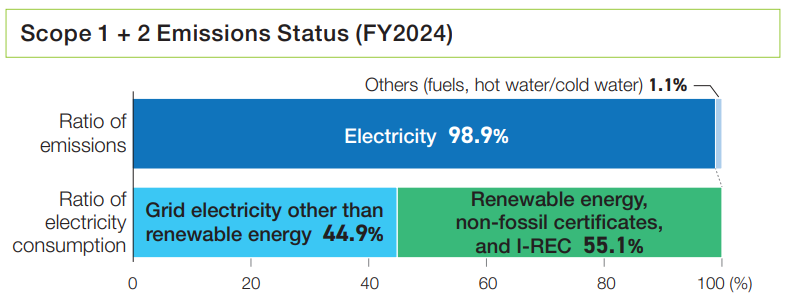
※3 I-REC (International Renewable Energy Certificate): An international “energy attribute certificate” recognized as a reliable certification scheme by major global reporting frameworks such as the GHG Protocol and CDP.
Energy Savings at Our Offices
At SCSK, we were one of the first companies in our industry to carry out working style reforms, with the implementation of our Smart Work Challenge in fiscal 2013. As well as optimizing business processes and reducing overtime, we are engaged in reducing the environmental burden generated by energy consumption through our business activities.
In fiscal 2015, we began promoting eco-friendly working styles such as working from home and remote conferencing, which reduced the need for our employees to travel for the sake of their work.
We implement office energy saving initiatives on a daily basis, and permit casual clothing styles throughout the year; this includes, but is not limited to, casual clothing campaigns such as Cool Biz in the summer and Warm Biz in the winter.
Main initiatives to reduce Scope 3 emissions
For outsources operations greenhouse gas emissions, we continued in FY2024 to transition to a calculation method that enables us to accurately identify greenhouse gas emissions from our outsourcing partners. Through this initiative, we will promote the formulation and implementation of more effective reduction measures based on the actual status of greenhouse gas emissions of our outsourcing partners. For Core partners※4, which are the core outsourcing partner companies of the SCSK Group, we explain and exchange views on the Group’s initiatives to reduce greenhouse gas emissions. We also ask them to calculate greenhouse gas emissions and set reduction targets while gaining their understanding.
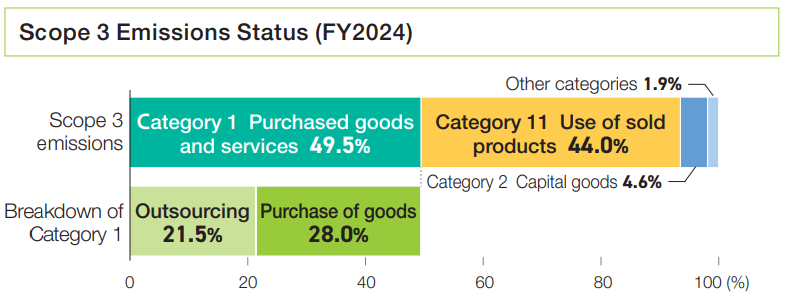
※4 Effective FY2025, the name has been changed to Prime Business Partner.
Development of products and services that contribute to the establishment of a carbon-free society
The SCSK Group provides services to facilitate companies' decarbonization and increased use of renewable energy to contribute to the establishment of a carbon-free society.
